|
7/5/2017 1 Comment This week, playwright Emily Dendinger writes about the script development process for SKINS:When David approached me to adapt the fairy tale known as Thousandfurs, I immediately said yes. Growing up with two sisters, we were obsessed with the picture book Princess Furball, about the clever princess who escapes an arranged marriage with the help of three dresses, a fur cloak, and her wits. The latter of these has always appealed to me. Here’s an actual fairy tale where the princess has agency and takes it upon herself to change her future. Before starting the script, David put together a reading/research group, or book club if you will, of actors, playwrights, dramaturgs, and other collaborators. We read the different versions of the story as well as criticism, and collectively determined how we wanted to tell this tale. For the most part, all versions depicted the princess the same – full of determination, intellect, and capable of deciding her own life. However, once the princess met the prince/king (it varies from version to version), that agency disappears or transforms into an eagerness to be noticed by the regal figure and marry him, thus securing the traditional “happily ever after” life. As a group, the more we discussed this, the less satisfying it was to us, so when I set out to write the script, it was one of the main questions I was grappling with: what does our princess’s happy ending look like? Or better yet, strip away the trappings of fairy tale, and what does she really want? In the spring, we met again with an early version of the script for a weekend with actors. Over the course of the three days, we read and discussed it, determined to get at the heart of the story. Under David’s direction, the actors devised moments inspired by the text including ballroom scenes and a chase-escape through the forest. By observing and listening to these talented actors, I started to see the story emerge and how our princess would be best served by the text. I went back home and started to write again with a clearer and stronger idea of what would be a more satisfying ending for our modern-day princess (for that’s truly what she is). As the cast began rehearsals last week, I’m excited to see how the play continues to grow and a change. One of my favorite things about working with David and Collective Unconscious is the hyper-collaborative environment and nature of all their pieces. As a writer, I find this thrilling. My words are only a blueprint, or jumping off place for designers, director, and actors to fill in the gaps. I’m eager to see what direction the play takes next, and look forward to seeing the final product in August. 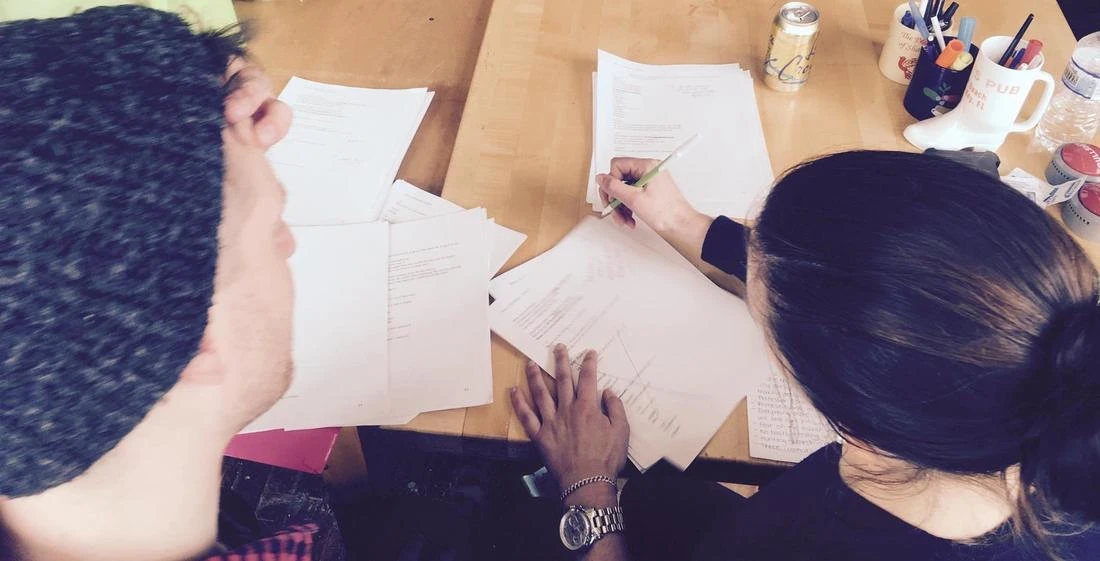
1 Comment
Monty
link
12/10/2020 12:09:25 am
Lovelly blog you have Leave a Reply. |
AuthorWrite something about yourself. No need to be fancy, just an overview. Archives
August 2020
Categories |

Search by typing & pressing enter
 RSS Feed